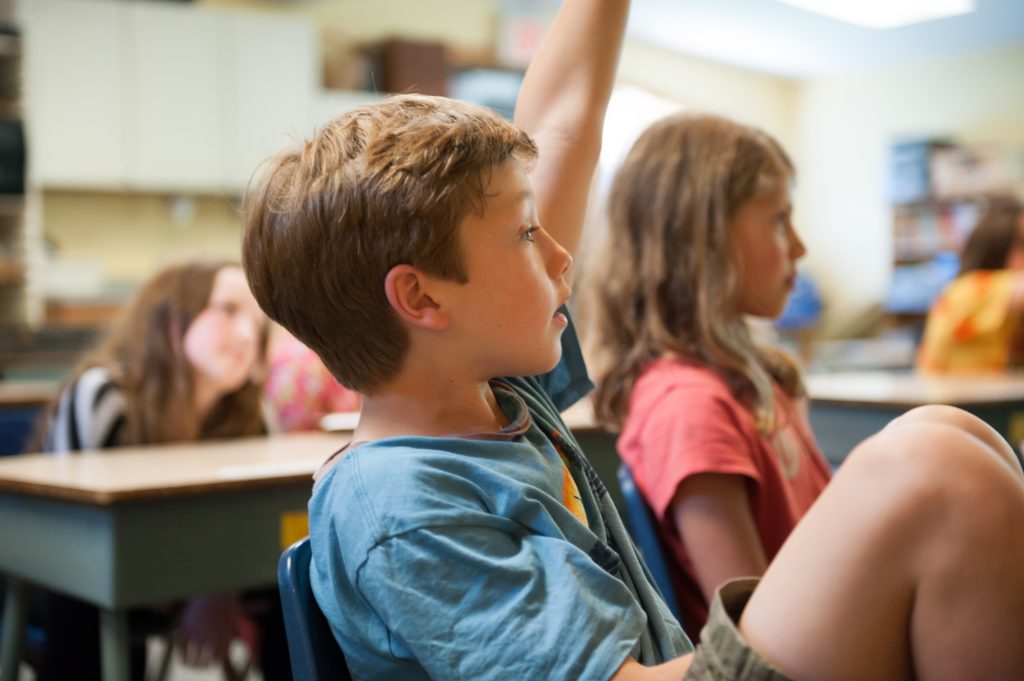
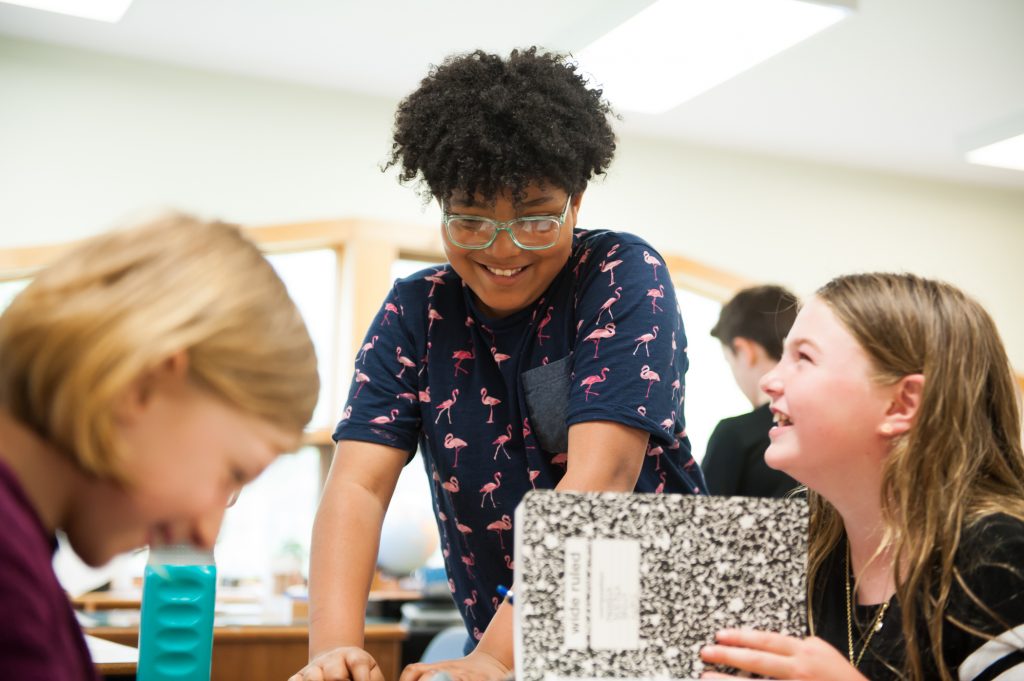
Every day begins with connection. We see you for who you are and build a foundation for who you will become.
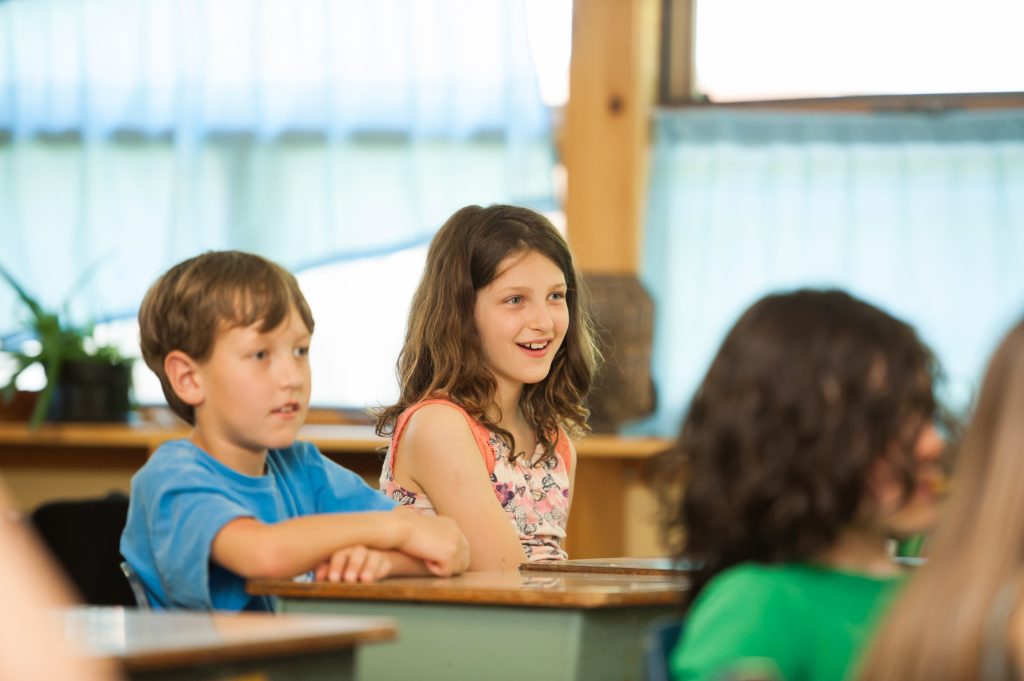
In grades 1-5 at the Lake Champlain Waldorf School, students embark on an educational journey both in their academics and within themselves. We create a safe place for kids to discover their love of learning.
Students tap into their innate curiosity, imagination, and creativity to explore a curriculum that progresses in tandem with their own development.
By focusing on each student’s head, heart, and hands, we lay the groundwork for deeper academic learning in the middle school, high school, and beyond.
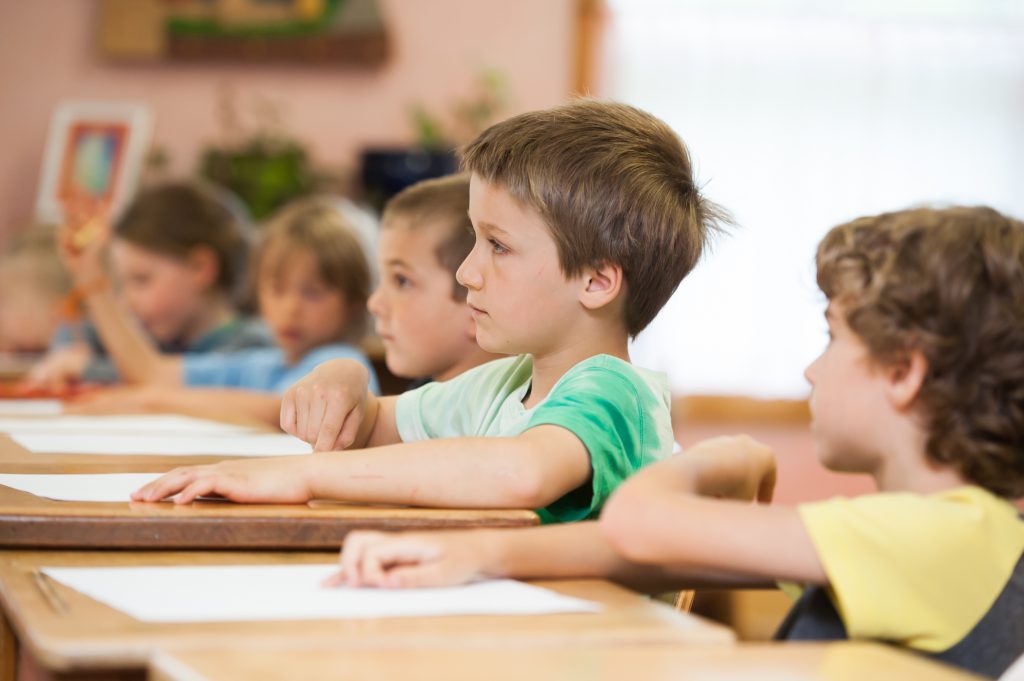
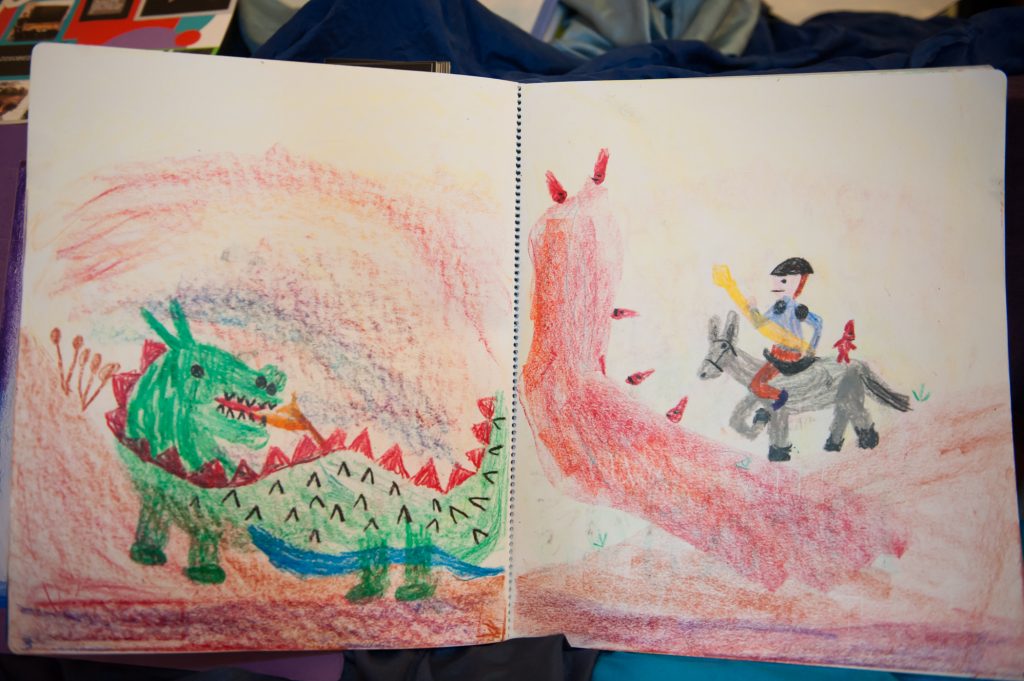
Our classrooms are filled with art, music, beauty, drama, problem-solving, wonder, and play, which bring English, math, science, and history to life. Movement engages students’ interest and prepares the brain to learn. Our daily schedule allows students to absorb the lessons fully through all their senses. Hands-on learning deepens concentration and awakens the intellect. Students create their own lesson books as a way to synthesize and present their learning.
Teachers remain with each class through their time in elementary school, forming a relationship that enables deep learning. Subject teachers provide rich access to French, arts and crafts, movement, and music, preparing students to be flexible and open, and to form new relationships outside their comfort zone.
Elementary education at LCWS incorporates the skills and gifts of each student to build their capacity to think, feel, and create in equal measure. Students forge deep social skills, learning how to resolve conflict and recognize their responsibility to others. They emerge from our elementary program at ease in childhood, with a confidence that prepares them for middle school.
We see first grade students arrive in elementary school with their eyes and hearts wide open. Our teachers preserve that openness in their students as they become more self-aware and experience a budding independence. Teachers introduce language and math, and students form a basis for all future learning with a deep focus on social curriculum.
Second Grade
Students enter second grade lively and curious. Fables and mythology help them explore big feelings, positive and negative, and provide possibilities for who they may become. Writing and reading skills and arithmetic concepts develop through daily practice. Science comes alive through working at New Village Farm and exploring the woods on our 22-acre campus.
Third Grade
Third grade brings significant changes to a student’s body, mind, and self-perception. Children begin to more fully understand themselves as individuals, separating from their families and communities. Classic stories of perseverance hold them steady in this new phase of questioning. Independence is celebrated within the safety of community, and a new emphasis on the practical—on building shelters, farming, toolmaking and working with fibers—builds confidence and reassures students of their own abilities.
Fourth Grade
The fourth grade curriculum focuses on strength and heroism through mythology. The studies of local history, geography, and mapmaking widen students’ perspective on their place in the world. Research, writing, and presentation skills are deepened through independent reports.
Fifth Grade
Students develop an increased capacity for reasoning, and an ability to examine the world. Beauty, harmony, and balance are hallmarks of the fifth grade year and are studied through botany, history, and geometry. A focus on world civilizations builds an understanding of students’ own humanity. The year culminates with a pentathlon that ties learning together in a practical and physical way, and inspires confidence as students prepare for the transition to middle school.