
The Lake Champlain Waldorf School provides academic excellence while meeting high school students in their search for truth, meaning, and purpose. Waldorf education is more relevant than ever before, challenging students to observe objectively and think critically. We support students as they navigate adolescence, to emerge as confident, compassionate global citizens, using their unique gifts and talents to bring positive change to the world.
High School
Our students learn to think for themselves and translate their new ideas into practice.
-
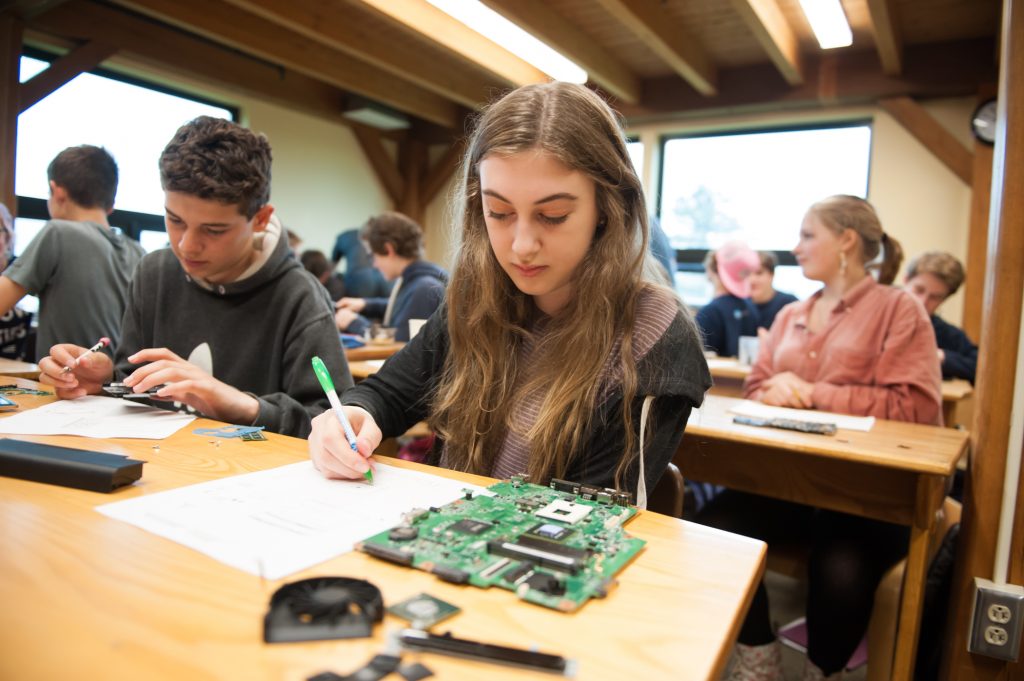
Ninth grade asks, what is in front of me?
Students begin high school enveloped in an emotional soul life, yet seeing the world primarily in black and white. As they navigate this sea of uncertainty, we challenge them to examine the world around them and focus on the certain. What do I observe? How does this work? Our ninth grade students learn to assess the world objectively, beyond thoughts, feelings, and value judgments. Can they be present in the world on its own terms? The tension of this adolescent phase is mirrored in the study of polar opposites, from heat and cold (thermodynamics), to extremes of conservative and radical thought (modern history).
-
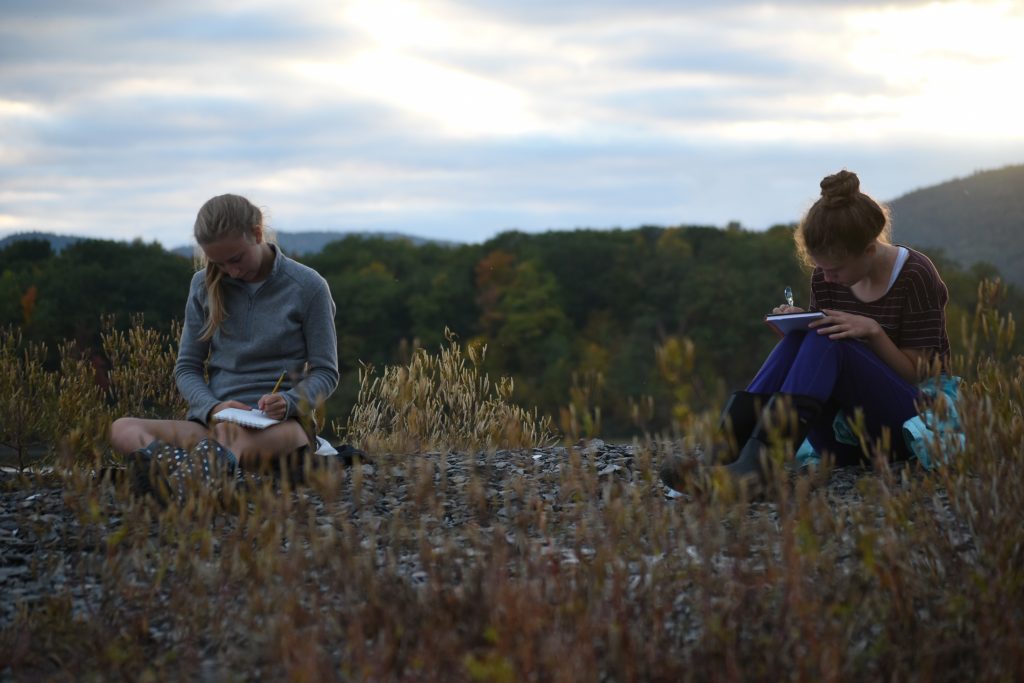
Tenth grade asks, how does the world fit together?
In tenth grade, students are more grounded and confidence grows. Ready to more deeply engage the objective world, they demand proof. Building connections, detecting processes, and tracing logic, they develop a clearer picture of how the world works. What are the processes that create a river, a work of art, or a mathematical proof? How did we get from woolly mammoths to the written word? Students perform an in-depth, scientific sleep study to objectively integrate concepts in human physiology, and replicate master painters to grasp the nuances of how their works of art were created.
-
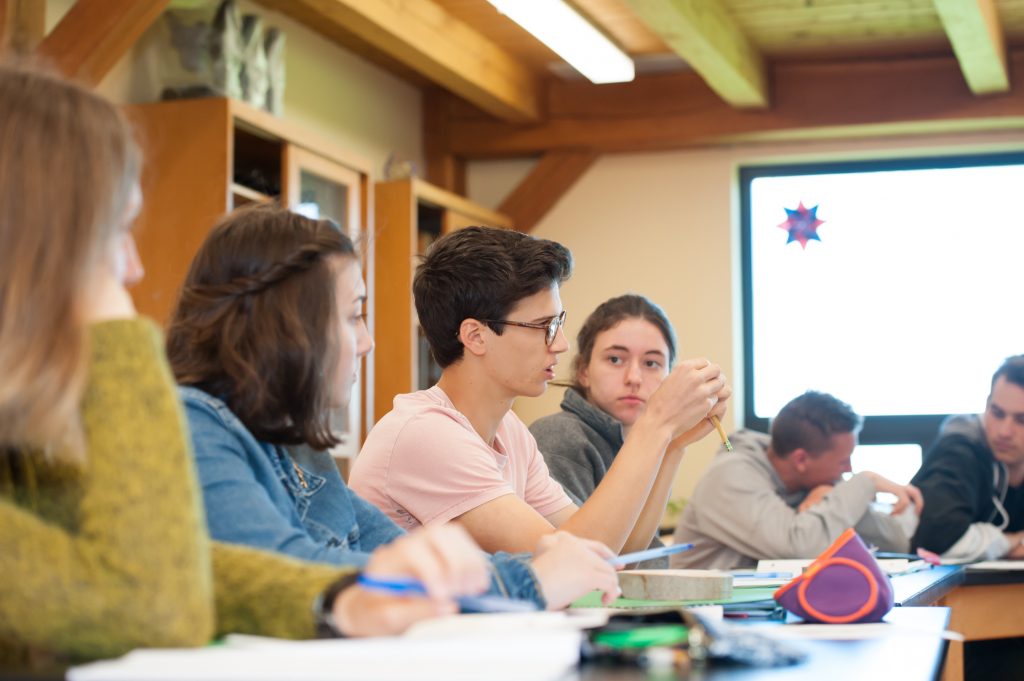
Eleventh grade asks, why are these things important?
By eleventh grade, students have an increased potential for self-reflection, discerning motive, and taking responsibility for themselves within their community. Building on observation skills developed in the lower grades, they “come home” to their thoughts and feelings and begin objective observation of themselves. The curriculum weaves through the study of self, from a focus on the birth of individualism in the Renaissance to the study of the developing human being in embryology. Mirroring their own development, students dive into Parzival, a medieval classic about finding one’s destiny through failure and making amends. Finding their unique gifts, they ask: what am I called to do?
-
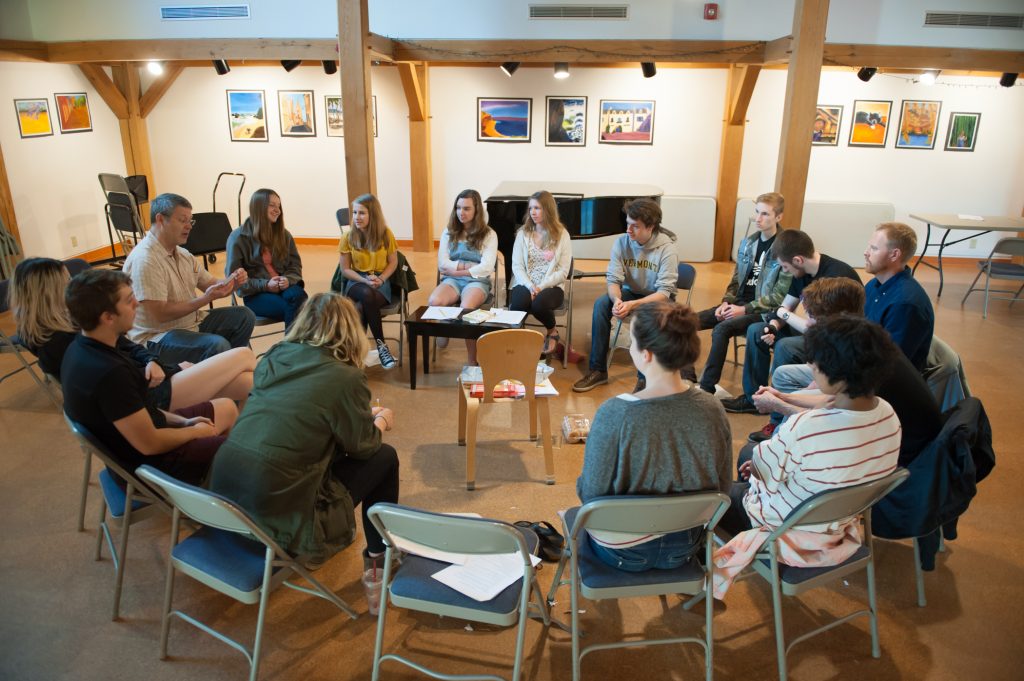
Twelfth grade asks, who am I, and what is the world asking of me?
Seniors are ready to ask big questions about who they are, and what they are meant to do in the world. Able to think both analytically and creatively, students draw back and seek a global perspective in modern philosophy, literature, and science. A capstone senior project involving research, creation, and community service gives students the opportunity to move from solving problems they are given, to identifying and studying problems they are passionate to address. Students emerge viewing themselves and others with equal measures of objectivity and compassion and are prepared to use their individual gifts to make an impact in the world.
-
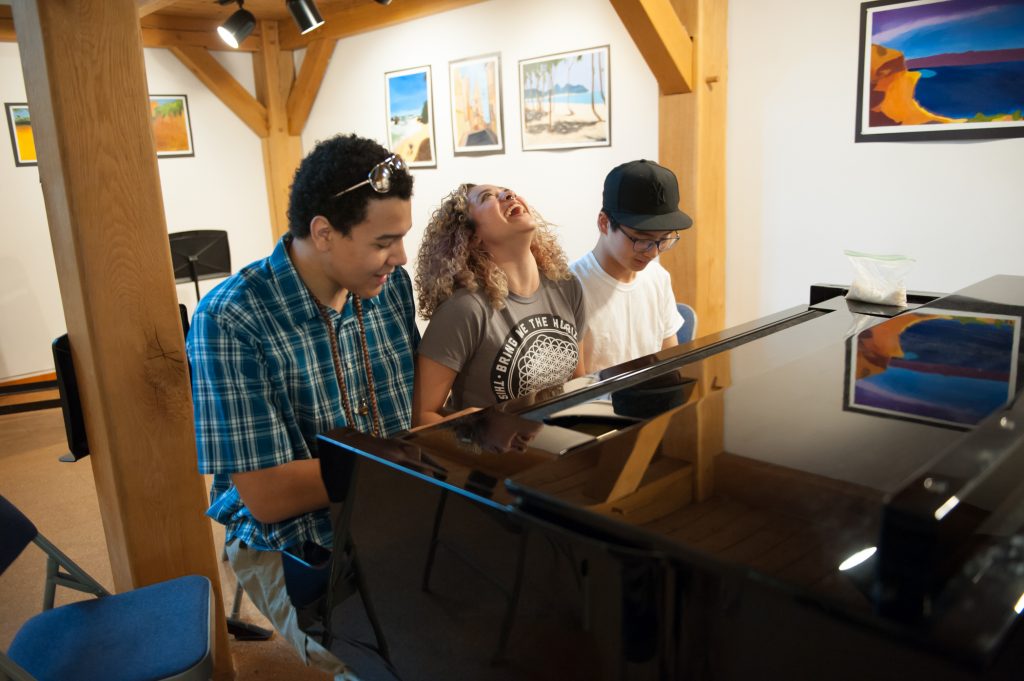
Extracurriculars & Clubs
Our clubs are an opportunity for students to explore interests, nurture passions, and have fun. You can perfect your cooking skills and compete in the Junior Iron Chef, organize a project to restore the environment or help plan the ever-popular Spirit Week. If the club you want doesn’t exist, then you can create it.
Examples of Recent Clubs:
GSA, Gardening Club, Theater Club, Yearbook Club, Dungeons and Dragons Club, Rock Climbing Club, and Junior Iron Chef
-
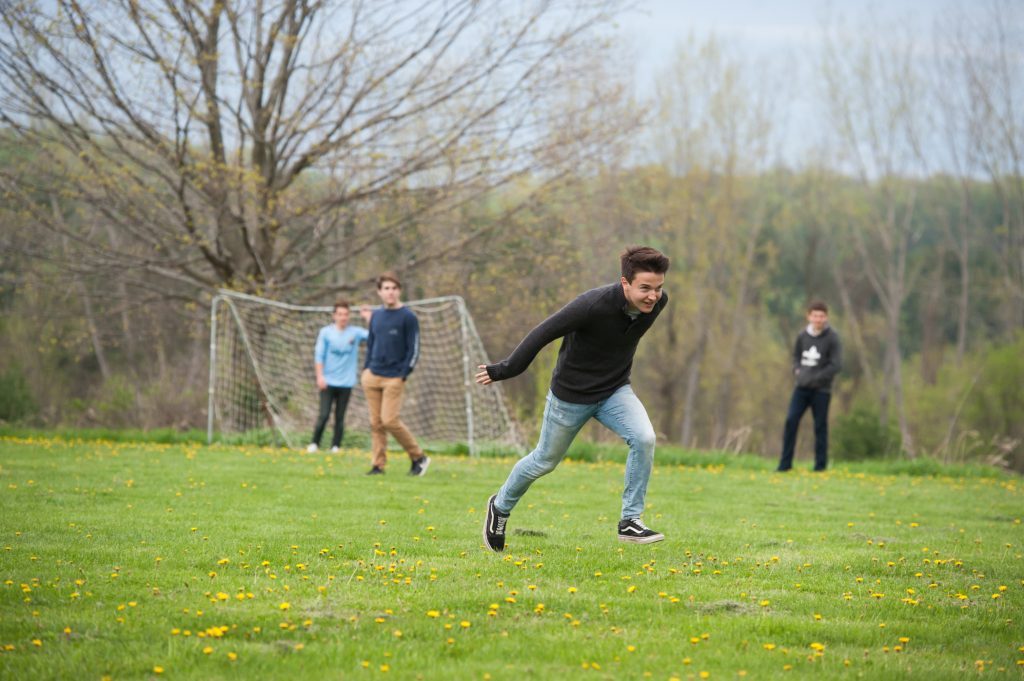
Movement & Outdoor Education
We cultivate students’ connection to nature and the body as a meaningful path to self-discovery. Our four-year outdoor program weaves together daily movement, day trips, and wilderness expeditions, blending physical challenge, academic inquiry, and community living. Each day begins with purposeful movement, grounding students for the work of learning. Weekly classes invite them into seasonal sports, strength and coordination, yoga, and collaborative games—building both skill and resilience. Here, everyone makes the team. Cooperation, respect, and the joy of playing are at the heart of our program, while expanding opportunities through partnerships with other schools, offering a range of team sports and experiences beyond our campus.
-
College Acceptance List
Allegheny College (PA)
Alfred University (NY)
American University (DC)
Bard College (NY)
Bates College (ME)
Bennington College (VT)
Beloit College (WI)
Berklee School of Music (CA)
Brown University (RI)
Bryant University (RI)
California College of the Arts (CA)
California Polytechnic State University (CA)
Centre College (KY)
Champlain College (VT)
Christopher Newport University (VA)
Clark University (MA)
Clarkson University (NY)
Colby-Sawyer College (NH)
College of the Atlantic (ME)
College of Wooster (OH)
Colorado College (CO)
Connecticut College (CT)
DePaul University – School of Theatre (IL)
Denison University (OH)
Dickinson College (PA)
Drew University (NJ)
Drexel University (PA)
Earlham College (IN)
Elmira College (NY)
Eckerd College (FL)
Endicott College (MA)
Eugene Lang (NY)
Fairfield University (CT)
Franklin and Marshall College (PA)
Green Mountain College (VT)
Grinnell College (IA)
Goucher College (MD)
Guilford College (NC)
Hamilton College (NY)
Hampshire College (MA)
Hobart William Smith (NY)
Hofstra (NY)
Husson University (ME)
Ithaca College (NY)
Juniata College (PA)
Keene State College (NH)
Kenyon College (OH)
Landmark College (VT)
Lasell College (MA)
Lawrence University (WI)
Lesley University (MA)
Lewis and Clark College (OR)
London Academy of Music & Dramatic Arts (UK)
Macalester College (MN)
Marist College (NY)
Marlboro College (VT)
McDaniel College (MD)
Mitchell College (CT)
Middlebury College (VT)
Mount Holyoke College (MA)
Muhlenberg College (PA)
Naropa University (CO)
New York University (NY)
Northeastern University (MA)
Oberlin College (OH)
Providence College (RI)
Quest University (Canada)
Quinnipiac University (CT)
Reed College (OR)
Rhode Island School of Design (RI)
Rochester Institute of Technology (NY)
Roger Williams University (RI)
Sacred Heart University (CT)
Saint John’s College (MD)
Sarah Lawrence College (NY)
Saint Lawrence University (NY)
Savannah College of Art and Design (GA)
Seton Hall University (NY)
Sierra Nevada College (NV)
Skidmore College (NY)
Smith College (MA)
St. Lawrence University (NY)
St. Michael’s College (VT)
Stonehill College (MA)
Susquehanna University (PA)
SUNY Binghamton (NY)
SUNY Purchase (NY)
Syracuse University (NY)
Tufts University (MA)
Union College (NY)
University of Massachusetts College of Music (MA)
University of Connecticut (CT)
University of Delaware (DE)
University of Denver (CO)
University of Maine (ME)
University of Mary Washington (VA)
University of Massachusetts – Amherst (MA)
University of New Hampshire, College of Engineering (NH)
University of Puget Sound (WA)
University of Richmond (VA)
University of Vermont (VT)
Vermont State University (VT)
Vassar College (NY)
Warren Wilson College (NC)
Washington College (MD)
Wells College (NY)
Wesleyan University (CT)
Western State College of Colorado (CO)
Westminster College (UT)
Wheaton College (MA)
Whitman College (WA)
Wittenberg University (OH)
Willamette College (OR)
Worcester Polytechnic Institute (MA)
York College (PA)